Explosions heard all over Iran as US strikes ...... Welcome to Glintnews......
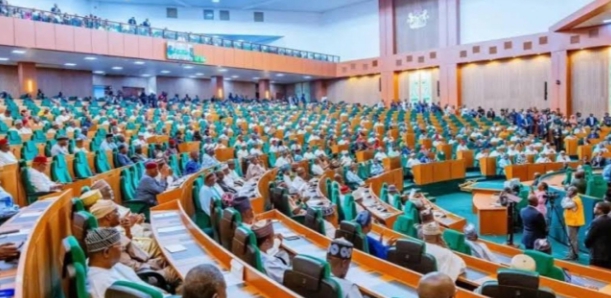
House of Representatives Passes State Police Bill, Moves Nigeria Closer to Historic Security Overhaul
June 11, 2026
In a landmark development that could fundamentally reshape Nigeria’s security architecture, the House of Representatives on Thursday passed a constitutional amendment bill seeking to establish state police across the federation.
The passage of the bill marks one of the most significant milestones in the country's long-running debate over decentralising policing and granting states greater control over internal security operations.
The bill was approved during plenary at the National Assembly and was monitored through the official NASS TV live broadcast. The development comes amid mounting concerns over the worsening security situation across Nigeria, including terrorism, banditry, kidnapping, communal violence, and attacks on rural communities that have continued to stretch the capacity of the centrally controlled Nigeria Police Force.
For years, security experts, state governors, traditional rulers and civil society groups have argued that Nigeria's current policing structure is inadequate for addressing the diverse and rapidly evolving security challenges confronting different regions of the country.
Supporters of state police believe localised policing will enhance intelligence gathering, improve rapid response to threats, and strengthen community-based security management.
The passage of the bill follows an appeal made on Wednesday by the Deputy Speaker of the House of Representatives and Chairman of the House Committee on Constitution Review, Benjamin Kalu, who urged lawmakers to attend Thursday’s plenary session for what he described as a critical constitutional vote.
Speaking to journalists in Abuja ahead of the deliberation, Kalu described the proposed amendment as a major breakthrough in the ongoing efforts to reform Nigeria’s security framework and address persistent gaps in law enforcement.
The latest legislative action also comes on the heels of recent assurances from the Presidency that constitutional processes required for the establishment of state police were nearing completion.

Last week, President Bola Ahmed Tinubu’s Chief of Staff, Femi Gbajabiamila, disclosed that extensive consultations had been underway for several months to address the legal, constitutional and operational issues surrounding the creation of state police formations.
According to him, the federal government had carefully examined various models and frameworks to ensure that the proposed system aligns with democratic principles while safeguarding against potential abuse.
"We started deliberations in the last three or four months on how to go about the establishment of state police as directed by Mr President," Gbajabiamila stated.
"Establishing state police is not something that you do with the snap of the fingers. There is a lot involved in terms of constitutional and legal considerations, and thankfully we have now gained significant traction."
He explained that securing the necessary constitutional amendments remains the immediate priority before the enactment of enabling laws that would define the structure, powers, responsibilities and oversight mechanisms of state police agencies.
The growing push for state police has been fuelled by persistent insecurity across several parts of the country. Critics of the existing policing system have repeatedly argued that the Nigeria Police Force is overstretched, underfunded and constrained by a highly centralised command structure that often limits its ability to respond swiftly to local threats.
In response to security challenges, several states have in recent years established regional security outfits such as the South-West Security Network, popularly known as Amotekun, as well as similar security arrangements in other regions. However, these organisations currently operate without full constitutional policing powers, limiting their effectiveness in law enforcement and criminal investigations.
Proponents of state police maintain that decentralising security operations would empower state governments to tackle crime more efficiently, improve local intelligence networks, strengthen collaboration with communities and reduce the burden on federal security agencies.
However, the proposal has also generated debate among stakeholders, with some critics expressing concerns that state police could be abused by political leaders for partisan purposes. Advocates of the reform insist that robust constitutional safeguards, independent oversight structures and clearly defined operational guidelines can address such concerns.
With the House of Representatives now approving the constitutional amendment bill, the proposal advances further in the legislative process and will undergo additional constitutional procedures before it can become law.
If eventually enacted, the state police system would represent one of the most far-reaching security reforms since Nigeria returned to democratic rule in 1999, potentially altering the nation's approach to policing, crime prevention and public safety for generations to come.
We keep you informed and involved with anything from breaking news to thought-provoking opinion articles.