Explosions heard all over Iran as US strikes ...... Welcome to Glintnews......
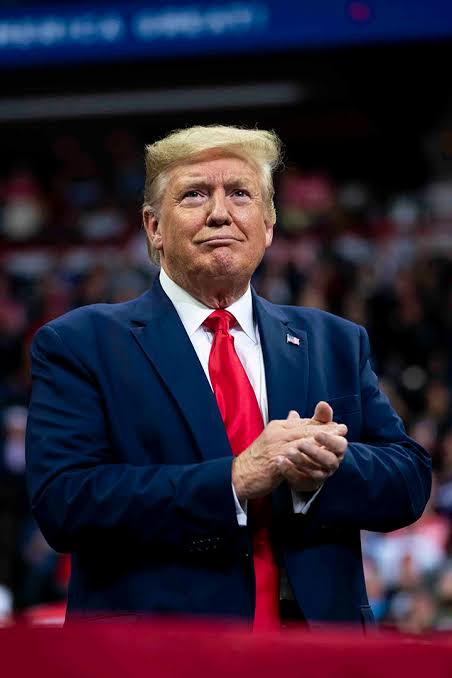
Nigeria Rejects Trump’s Religious Killings Claim as Global Outcry Grows Over Government’s Failure to Protect Christians
Abuja Nigeria — November 1, 2025
The Federal Government of Nigeria has rejected recent remarks by U.S. President Donald J. Trump alleging widespread killings of Christians in Nigeria and calling for the country’s designation as a “Country of Particular Concern” (CPC) for religious persecution.

In a statement released on Saturday by the Ministry of Foreign Affairs and signed by its spokesperson, Kimiebi Imomotimi Ebienfa, the government described Trump’s comments as “inaccurate and not reflective of the realities on the ground.”
Nigeria Rejects Trump’s Religious Killings Claim as Global Outcry Grows Over Government’s Failure to Protect Christians
According to the Ministry, under the leadership of President Bola Ahmed Tinubu, Nigeria remains committed to fighting terrorism, promoting interfaith harmony, and protecting the rights of all citizens regardless of religion or ethnicity. Ebienfa further noted that Nigeria would continue to engage the United States through diplomatic channels to promote “mutual understanding” of the country’s complex security dynamics.
However, President Trump’s statement, delivered from the White House on Friday, has sparked international attention and revived old concerns about the Nigerian government’s handling of religious and ethnic violence. Trump accused the Nigerian authorities of turning a blind eye to the “systematic killing of Christians,” describing it as one of the world’s most underreported human rights crises.
He said:
“Thousands of innocent Christians have been killed, churches burned, and communities destroyed in Nigeria while the government continues to do nothing. This is unacceptable, and the world cannot remain silent.”

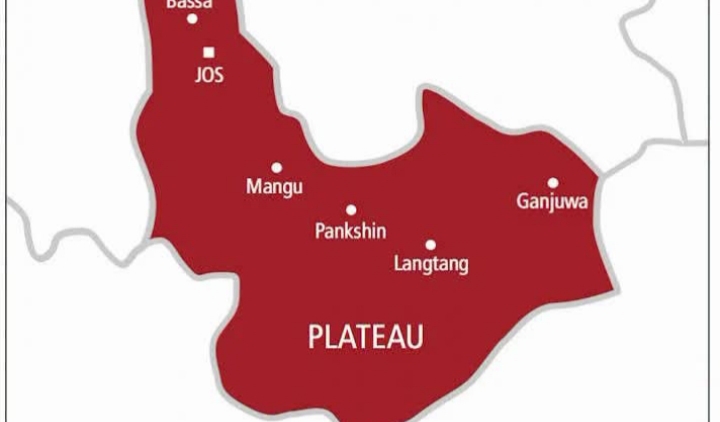
Trump’s declaration comes amid years of growing concern by international human rights organizations over the deteriorating security situation in Nigeria — particularly in Benue, Southern Kaduna, Plateau, and parts of the South-East, where reports indicate that militant groups and Fulani militias have carried out numerous deadly attacks on predominantly Christian communities.
Between 2015 and 2025, various watchdog groups, including Open Doors International, Amnesty International, and Christian Solidarity Worldwide (CSW), have documented more than 30,000 Christian deaths linked to terrorist groups such as Boko Haram, Islamic State in West Africa Province (ISWAP), and armed Fulani herders. Thousands of churches have been destroyed, and millions displaced, with little or no government accountability for these atrocities.
Despite these grim figures, critics argue that successive Nigerian governments — including the current administration of President Tinubu — have failed to take decisive action to protect Christian communities or to prosecute those responsible for these crimes. Many Nigerians and global observers say that while the government routinely condemns attacks, it has not demonstrated the political will to confront the perpetrators, many of whom operate freely in rural areas.

A major source of frustration among Christian leaders and civil society organizations is the Nigerian government’s repeated decision to grant amnesty and rehabilitation to captured terrorists. In several high-profile cases, members of Boko Haram and other extremist groups have been “deradicalized” and reintegrated into society instead of facing justice.
Security analysts argue that this approach sends a dangerous message — that those who commit mass killings or destroy entire communities can evade punishment under the guise of national reconciliation. In contrast, survivors and displaced victims, many of them Christians, continue to live in dire conditions in overcrowded IDP (Internally Displaced Persons) camps with little government support.
Equally troubling is the government’s controversial policy of dialogue and negotiation with armed bandits and Fulani militias, many of whom have claimed responsibility for attacks on farming villages. Despite numerous peace agreements signed at state and local levels, the violence has persisted, and the perpetrators remain largely unpunished. Reports from Kaduna, Zamfara, and Niger States show that government officials have, on multiple occasions, entered into negotiations with armed groups — often resulting in temporary truces that collapse within weeks.
Critics say this approach has emboldened the attackers rather than stopping them. “You cannot negotiate with people who have murdered thousands and still carry weapons,” said Reverend Samuel Ternenge, a priest in Benue State. “Our people are being killed daily, and the government’s only response is to call for peace talks while no one is ever arrested or tried. This is not peace — it is betrayal.”

Many Nigerians also point to the fact that no single Fulani militia leader has ever been successfully prosecuted for the mass killings in the Middle Belt or Southern regions. Instead, communities report that the attackers often return unchallenged, occupy farmlands, and establish new settlements. In states such as Plateau, Benue, and Nasarawa, several villages have reportedly been renamed or taken over by new settlers linked to the assailants.
Human rights experts say these patterns of impunity and inaction are contributing to growing distrust in the federal government. “What we are seeing is a dangerous normalization of violence,” said Dr. Grace Obianuju, a security analyst based in Abuja. “The world cannot pretend that everything is fine when entire communities have been erased. If the government truly wants peace, it must start by enforcing justice.”
The United States, the European Union, and several international faith-based organizations have repeatedly urged Nigeria to ensure accountability for perpetrators of religious and ethnic violence. In 2022, the U.S. State Department removed Nigeria from its list of Countries of Particular Concern, but pressure has since mounted for its reinstatement following continued attacks.
President Tinubu’s administration insists it has intensified security operations and community peace-building initiatives across the country. The Ministry of Foreign Affairs reiterated that the government’s approach remains inclusive, stressing that terrorism in Nigeria affects both Christians and Muslims.
“Under President Tinubu, Nigeria remains committed to fighting terrorism in all its forms — whether driven by ideology, ethnicity, or criminal motives. Our focus is on protecting every Nigerian life, Christian or Muslim alike,” the statement said.
Despite this assurance, many Nigerians argue that government responses have been largely reactive and superficial. Security forces are often accused of arriving late at the scenes of attacks or failing to prevent assaults despite prior intelligence warnings. Victims of previous massacres — including those in Agatu, Miango, Zangon Kataf, and Adara communities — say they have yet to receive justice or compensation years after the incidents.
As the controversy continues, diplomatic observers in Abuja believe Nigeria’s rejection of Trump’s remarks may not be enough to quell international criticism. Several advocacy groups in Washington and Europe are now calling for independent investigations into alleged religious persecution in Nigeria and the government’s apparent tolerance of extremist violence.
While the Tinubu administration seeks to preserve its international image and maintain strategic relations with the United States, pressure is mounting both at home and abroad for Nigeria to confront the deeper issues of religiously motivated violence, impunity, and systemic neglect of victims.

For now, the world is watching closely as Nigeria — Africa’s most populous nation — struggles to balance diplomacy with accountability amid mounting evidence that tens of thousands of Christians have paid the price for the government’s inaction.
We keep you informed and involved with anything from breaking news to thought-provoking opinion articles.