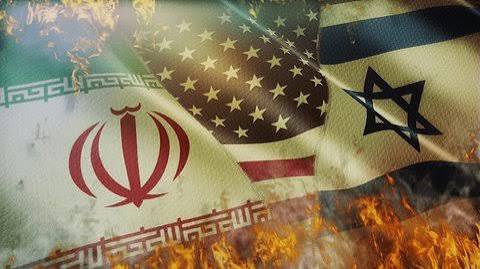
Explosions heard all over Iran as US strikes ...... Welcome to Glintnews......
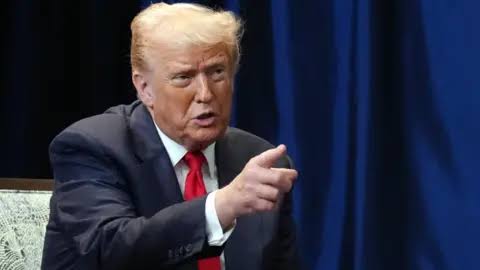
President Trump Says Military Action On Terrorists In Nigeria “Could Be Ground Troops, Air Strikes
In a bold and controversial statement that has stirred global attention, United States President Donald J. Trump has hinted at the possibility of direct U.S. military intervention in Nigeria to combat escalating terrorist activities in parts of the country. Trump, who made the remarks during a televised interview on Sunday, stated that America “cannot continue to watch innocent Christians and civilians being slaughtered” by extremist groups in Nigeria and across West Africa.

According to Trump, the United States government under his proposed foreign policy would no longer “stand idly by” while terror groups such as Boko Haram, ISWAP (Islamic State West Africa Province), and bandit militias continue to destabilize Africa’s most populous nation. “Nigeria is too important to fail,” Trump emphasized. “What’s happening there is genocide. It’s evil. The world has to act, and if the Nigerian government cannot handle it, then America may have to consider decisive action — whether that means airstrikes, intelligence missions, or ground operations.”
The statement immediately triggered a wave of reactions from international observers, African leaders, and human rights organizations. While some analysts believe Trump’s remarks reflect growing global concern about the deteriorating security situation in Northern and Central Nigeria, others warned that such comments could escalate diplomatic tensions between Washington and Abuja.
Nigeria has, for over a decade, battled multiple armed groups responsible for thousands of civilian deaths, mass kidnappings, and displacement of entire communities. Despite ongoing efforts by the Nigerian Armed Forces, the insurgency has persisted, with attacks extending beyond the North-East to states in the Middle Belt and North-West regions.
A senior Nigerian security analyst, Col. Hassan Ibrahim (rtd.), responding to Trump’s statement, noted that foreign military involvement in Nigeria’s internal crisis could have both benefits and drawbacks. “On one hand, U.S. intervention could boost intelligence gathering and tactical support,” he said. “But it could also raise sovereignty concerns, especially if it involves deploying ground troops without bilateral agreements.”

Meanwhile, the Nigerian government has yet to issue an official response to Trump’s remarks. However, a senior aide to President Bola Ahmed Tinubu, who spoke anonymously, described the U.S. president’s statement as “an unnecessary provocation.” He stressed that Nigeria remains “fully capable of managing its internal security challenges without external interference.”
Human rights organizations have also weighed in on the issue. Amnesty International and Human Rights Watch both reiterated their calls for international attention to the rising wave of violence in Nigeria, particularly the repeated targeting of Christian and rural communities by armed militants.
Political commentators in Washington have described Trump’s rhetoric as part of his broader foreign policy strategy to reassert America’s influence in Africa, especially as global powers like China and Russia increase their footprint on the continent. During his tenure as president, Trump was criticized for what some viewed as a lack of coherent Africa policy, but his recent statements suggest a shift toward more interventionist thinking.
As the debate continues, experts warn that any U.S. military involvement in Nigeria could reshape regional dynamics in the Sahel and West Africa, where terrorism and political instability remain major threats. For now, the world watches closely to see whether Trump’s remarks will evolve into a concrete policy proposal or remain a campaign-era declaration aimed at attracting global headlines.
If confirmed, such a move could mark a historic turning point in U.S.–Africa relations and reignite conversations about international responsibility, national sovereignty, and the global fight against terrorism.
We keep you informed and involved with anything from breaking news to thought-provoking opinion articles.