Explosions heard all over Iran as US strikes ...... Welcome to Glintnews......
Zamfara’s Bandits exchanges Gold for Guns, Turn Nigeria’s Mineral-Rich State into a Full-Blown Conflict Economy
Zamfara State, Nigeria – November 1, 2025
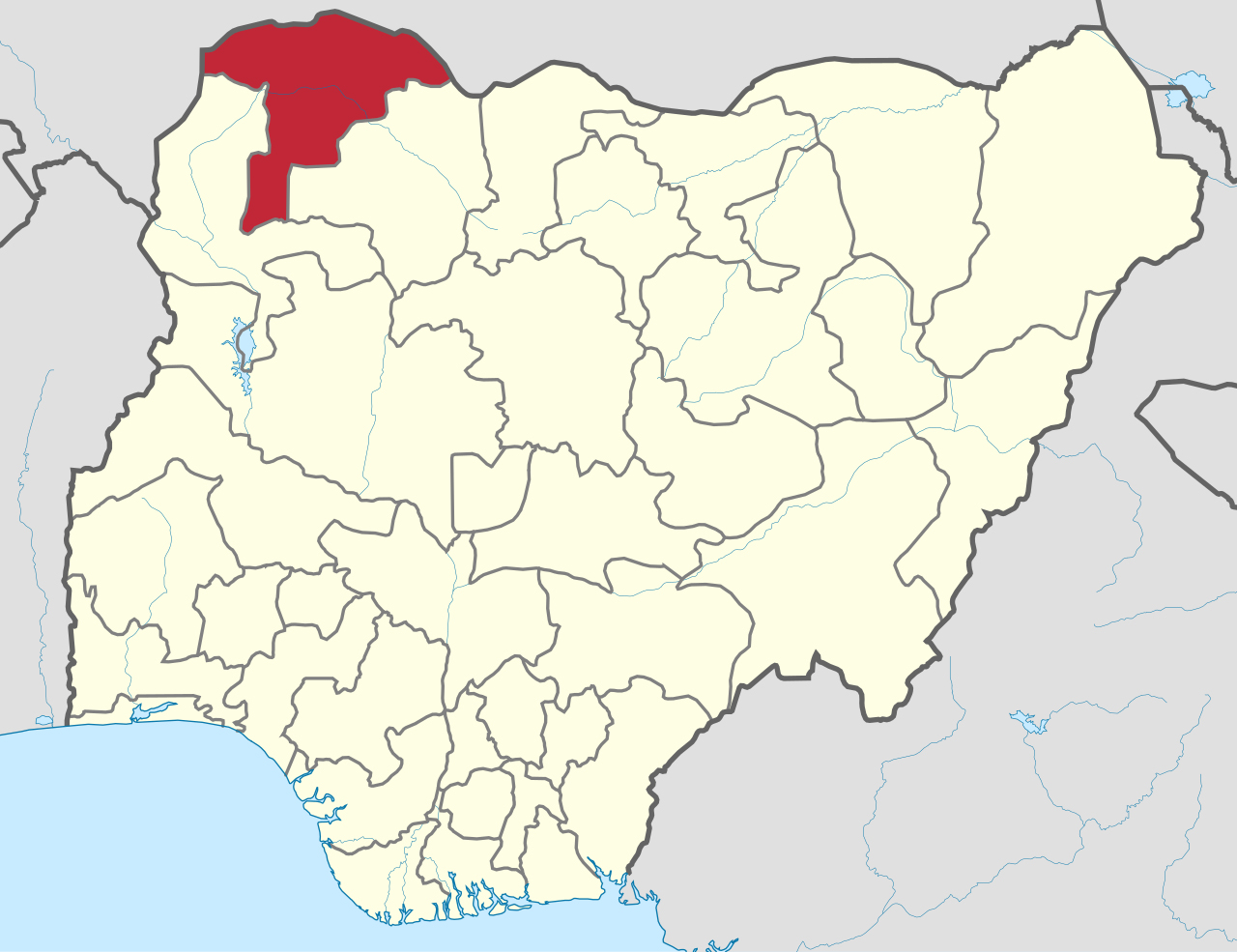
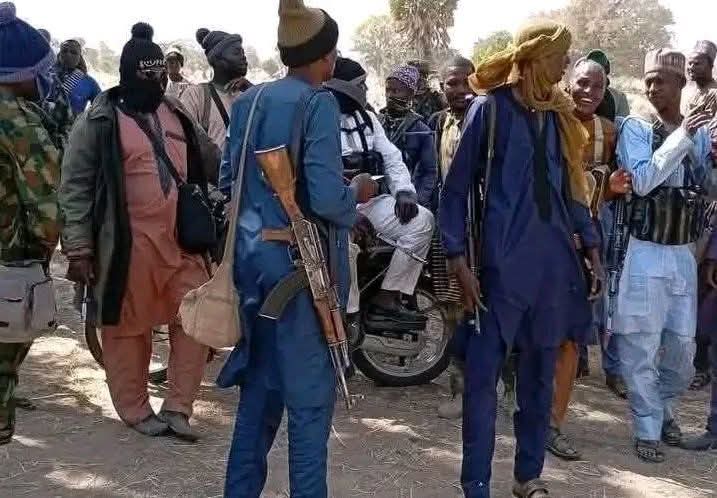
Zamfara State, once known for its fertile farmlands and rich mineral deposits, has descended into one of the darkest crises in Nigeria’s modern history. Once celebrated as a region of promise, Zamfara has now become the epicenter of a deadly underground trade where bandits exchange gold for guns — a transformation that has turned the state into what analysts now call a “conflict economy.”

According to an extensive investigation and field research conducted by D English Alhaji, a respected activist and conflict researcher, armed groups operating across Zamfara have established a sophisticated trade network that links illegal gold mining sites to regional and international arms markets. The findings describe how these bandits now dominate mining communities, extort villagers, and use the proceeds from the sale of gold to purchase weapons, motorbikes, and ammunition.
D English Alhaji’s research portrays a terrifying reality where gold, once a symbol of wealth and opportunity, has become a deadly currency that fuels violence, insecurity, and corruption. He explained that in many parts of Maru, Anka, Bukkuyum, Dansadau, and Shinkafi, local miners no longer operate freely. “The bandits now act as the government,” he said. “They decide who mines, who pays, and who lives or dies.”
Residents confirm that to gain access to mining pits, miners are forced to pay heavy levies to bandit groups who in turn use the funds to buy guns through established smuggling routes. The gold mined from Zamfara is smuggled through porous borders into neighboring Niger Republic, where it is exchanged directly for weapons from black-market dealers. Security analysts say the same routes used for the trade in narcotics and contraband across the Sahel region are now being exploited for the gold-for-guns network.
What has emerged, according to experts, is a full-fledged conflict economy — a system in which crime and war have become profitable, and violence itself is sustained by those who benefit from it. Dr. Musa Inuwa, a conflict analyst at the University of Abuja, described Zamfara’s situation as “Northern Nigeria’s version of the blood diamond crisis.” He noted that “the more gold is mined, the more weapons flood the region, and the deeper the people sink into chaos.”

D English Alhaji’s findings further reveal that powerful individuals, both within and outside the state, are complicit in the ongoing crisis. He accuses certain political figures, corrupt security officers, and business elites of profiting from illegal mining and using their influence to shield criminal operations. “This is not just about bandits in the forest,” Alhaji said. “There are powerful people behind the scenes who benefit from the instability. As long as the violence continues, their profits remain secure.”
Government inaction and negligence, according to Alhaji’s research, have made the situation worse. Despite repeated warnings from civil society and local leaders, federal and state authorities have failed to regulate the mining sector or secure the porous borders that enable the gold-for-guns trade. In 2019, the federal government temporarily banned mining activities in Zamfara, claiming the ban would help curb insecurity. But the move, poorly executed and riddled with corruption, only pushed the trade deeper underground. Within months, illegal mining resumed under the watch of complicit officials and powerful local interests.
Many residents believe that the Nigerian government has not only failed to protect them but has, in some cases, indirectly empowered the criminals. There have been reports of high-level negotiations between state officials and bandit leaders, where terrorists are granted amnesty or financial incentives under the guise of “peace deals.” In some instances, captured bandits are released without trial, while victims of their attacks continue to languish in poverty and displacement.
The impact on local communities has been catastrophic. Farming, the main source of livelihood for millions of people, has been crippled by persistent attacks. Villagers are forced to pay “harvest taxes” to bandits before they can work their own land. Those who refuse face abduction, death, or the burning of their farms. “We live in fear every day,” said a displaced farmer from Dansadau. “If you don’t pay the bandits, you cannot go to your farm. If you try, they kill you or take your children.”
The humanitarian toll is staggering. Thousands have been killed in raids and ambushes, while over half a million people have fled their homes. Many now live in overcrowded camps in Zamfara, Katsina, Sokoto, and Niger states. Schools in rural communities remain closed, healthcare systems have collapsed, and children have been forced into labor or recruited into mining sites controlled by armed groups.
D English Alhaji’s research further uncovers how this illicit economy has created a chain reaction of poverty and desperation. “Young men who can no longer farm or find work are being drawn into illegal mining or outright banditry,” he explained. “The line between victim and perpetrator has become blurred. Poverty, greed, and survival now coexist in the same space.”
International attention is now turning toward the crisis. Reports by the Global Initiative Against Transnational Organized Crime (GI-TOC) and the United Nations Office on Drugs and Crime (UNODC) have echoed Alhaji’s warnings, calling Zamfara a potential hub for transnational organized crime. The illegal gold trade is not only financing local banditry but also feeding into broader regional instability in the Sahel, linking Nigeria’s insecurity to that of Mali, Burkina Faso, and Niger.
Foreign governments have expressed growing concern that Nigeria’s unregulated gold sector could soon rival the conflict-financed mineral trades that once destabilized West Africa. “Zamfara’s gold has become the blood diamond of this generation,” said one Western security official. “If nothing is done, the violence will spread beyond Nigeria’s borders.”
D English Alhaji’s investigation calls for urgent reforms. He recommends that the Nigerian government formalize and regulate artisanal mining to cut off criminal intermediaries, strengthen financial tracking systems to trace illicit gold sales, and close down smuggling routes through regional cooperation with Niger and Chad. He also advocates for economic empowerment programs, particularly for young people, to reduce the lure of illegal mining and banditry.
“The only way to break this cycle,” Alhaji said, “is to give people an alternative — jobs, security, and justice. You cannot bomb your way out of a conflict economy. You must rebuild trust and opportunity.”
Analysts agree that military action alone will not solve Zamfara’s crisis. They insist that the problem is rooted in governance failure, corruption, and the collapse of legitimate authority. Without holding powerful figures accountable for their roles in the illegal gold trade, any effort to restore peace will remain superficial.
The tragedy of Zamfara, however, is not just the loss of life but the loss of hope. The state’s vast resources — once seen as a path to development — have become its curse. “Gold was supposed to bring progress,” said a local elder in Anka, shaking his head in despair. “But it has brought nothing but blood and sorrow.”
In his concluding remarks, activist and researcher D English Alhaji summed up the dilemma in one haunting sentence:
“Gold was meant to make Zamfara shine, but now it is the reason our people are dying.”

Until Nigeria confronts this grim reality and dismantles the economic structures that reward conflict, Zamfara’s gold will remain stained — not with wealth, but with the blood of its own people.
We keep you informed and involved with anything from breaking news to thought-provoking opinion articles.