Nigeria to Battle DRC today by 8:00Pm......
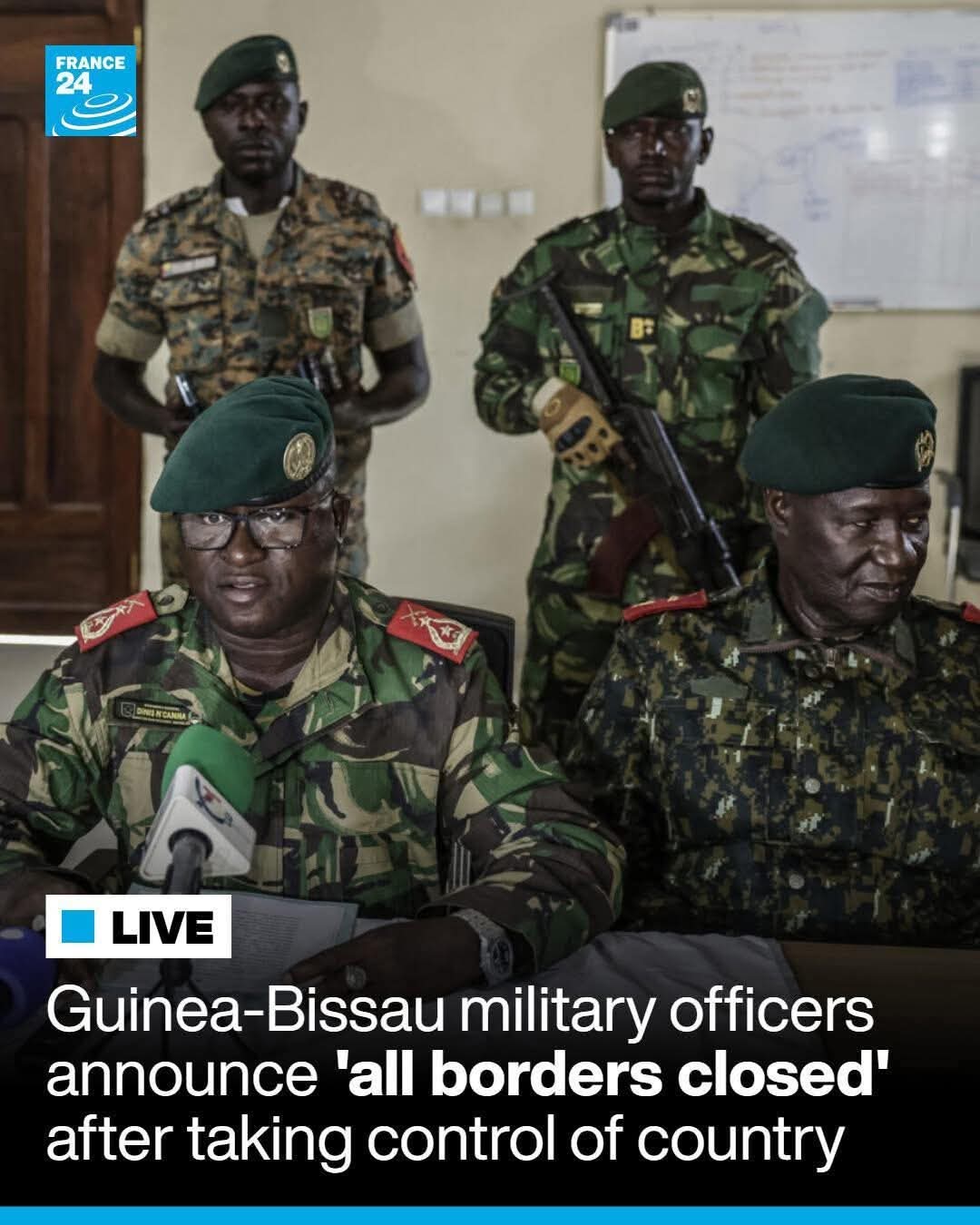
Guinea-Bissau Military Officers Declare ‘Total Control’ of Country, Arrest President Umaro Sissoco Embalò
27th November 2025
Guinea-Bissau has been thrown into a new wave of political turmoil after senior military officers announced that they had taken “total control” of the country and placed President Umaro Sissoco Embaló under arrest. The dramatic development marks one of the most serious challenges to civilian authority in the West African nation since its 2022 attempted coup and adds to growing regional concerns over democratic stability.

According to military sources and local media reports, the officers — believed to be aligned with a powerful faction within the armed forces — took over strategic installations in the capital, Bissau, early Tuesday morning. Residents reported seeing heavily armed troops surrounding key government buildings, including the presidential palace, national radio, and major road intersections, effectively sealing off the city center.
The military leadership, in a brief broadcast on state media, declared that they had “assumed total control of the Republic of Guinea-Bissau” to protect national sovereignty and restore what they described as “constitutional order.” They accused the Embaló administration of undermining democratic institutions, mismanaging public funds, and enabling widespread corruption — allegations the government has repeatedly dismissed as politically motivated.
President Embaló, whose whereabouts were initially unclear, was later confirmed to be in military custody. Sources inside Bissau say he was detained shortly after returning from a private engagement, though the military has yet to publicly state the charges against him or outline what the next steps will be.
The sudden takeover has sparked fear and confusion among citizens, many of whom have lived through years of political instability marked by assassinations, military interventions, and deep divisions within the country’s political elite. Witnesses say shops closed abruptly, public transport halted, and people rushed home amid uncertainty about whether violence might erupt.

International reaction was swift. The Economic Community of West African States (ECOWAS), which has previously intervened politically and militarily in Guinea-Bissau, condemned the action as an unlawful seizure of power and called for Embaló’s immediate release. The African Union also expressed “deep concern,” urging the military to return to the barracks and ensure the safety of all elected officials. Western diplomats in the region are said to be monitoring the situation closely as they attempt to obtain clarity on the military’s intentions.
Analysts warn that this latest development could plunge the already fragile nation into a prolonged crisis. Guinea-Bissau has long struggled with political volatility, often fueled by internal rivalries and the influence of narcotics trafficking networks that view instability as an opportunity to expand their operations. Many fear the military’s declaration of authority could further weaken democratic structures and create space for dangerous power struggles.
As evening approached, the military imposed heavy security across Bissau, but the streets remained tense and eerily quiet. There were no immediate reports of clashes, though several political allies of the president are said to have gone into hiding or sought refuge in foreign embassies.
With the future of the country hanging in the balance, citizens and observers alike wait anxiously to see whether this marks yet another temporary power reshuffle — or the beginning of a new and uncertain chapter for Guinea-Bissau.
We keep you informed and involved with anything from breaking news to thought-provoking opinion articles.