Ethnic Tensions Rise In Oyo As Hausa Community Protests Profiling Over School Kidnappings
June 11, 2026
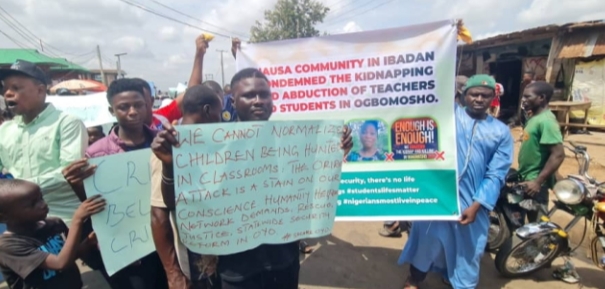
Members of the Hausa community in Ibadan, the Oyo State capital, staged a peaceful protest on Wednesday, condemning what they described as increasing ethnic profiling and stigmatisation in the aftermath of recent mass kidnappings that have shaken communities across the state.
The demonstrators, who marched through major parts of the city carrying placards and chanting solidarity songs, expressed concern over what they called attempts to collectively blame Hausa residents for criminal activities allegedly carried out by armed kidnapping gangs operating in parts of Oyo State.
Community leaders said the actions of a few criminal elements should not be used to paint an entire ethnic group in a negative light, warning that such narratives could deepen divisions and threaten the long-standing peaceful coexistence among residents of the state.
The protest comes amid heightened public outrage following a series of shocking abductions that have brought national attention to Oyo State and raised fresh concerns about the spread of kidnapping activities into regions previously considered relatively secure.
For years, large-scale school abductions were largely associated with northern Nigeria, where armed groups repeatedly targeted educational institutions, forcing thousands of students out of classrooms and creating widespread fear. However, recent events in Oyo State have fueled concerns that such tactics are gradually spreading to other parts of the country.
One of the most disturbing incidents occurred when heavily armed attackers stormed communities in the state, arriving on motorcycles and firing gunshots indiscriminately to terrorise residents before carrying out a coordinated mass abduction.
According to reports, the gunmen forcefully marched dozens of victims into the vast forest reserves bordering the Old Oyo National Park, taking advantage of the difficult terrain to evade security operatives.
A total of 46 people were abducted during the raid, including 39 pupils—some reportedly as young as two and three years old—and seven teachers. The attack sent shockwaves across Oyo State, triggering panic among parents, educators, and residents.
The violence turned deadly almost immediately when a teacher, Joel Adegboye Adesiyan, was reportedly shot and killed while attempting to shield his students from the attackers. His death sparked widespread grief and tributes from colleagues, students, and community members who described him as a courageous educator who paid the ultimate price in defense of those under his care.
The tragedy deepened further with the reported killing of Michael Oyedokun, a 57-year-old mathematics teacher and father of two. According to accounts from relatives and community leaders, Oyedokun was executed by the kidnappers two days after being taken into captivity.
The alleged circulation of footage showing the killing on social media generated nationwide outrage, drawing condemnation from civil society groups, education advocates, and political leaders. The incident has also intensified calls for stronger security measures to protect schools and vulnerable communities.
As fear continues to grip affected areas, many families remain trapped in uncertainty, desperately awaiting news about the fate of their loved ones. Some residents have reportedly fled their homes over concerns about further attacks, leaving several communities partially deserted.
During the protest, representatives of the Hausa community stressed that they stand firmly against kidnapping, banditry, and all forms of criminality. They called on security agencies to pursue perpetrators through intelligence-driven operations rather than encouraging ethnic stereotypes that could stigmatise innocent citizens.
The protesters also appealed to political leaders, traditional rulers, and religious organisations to promote unity and discourage inflammatory rhetoric capable of fueling ethnic tensions.
Local leaders and stakeholders have similarly urged residents to remain calm and avoid retaliatory actions, emphasizing that criminals should be identified and prosecuted based on evidence rather than ethnicity or regional origin.
As security agencies intensify efforts to rescue those still in captivity and bring the perpetrators to justice, observers warn that maintaining social cohesion will be crucial in preventing the security crisis from evolving into a broader ethnic conflict.
For many residents, the twin challenges of rising insecurity and growing ethnic suspicion underscore the urgent need for effective security responses, community engagement, and responsible public discourse to ensure that criminals are isolated while innocent citizens are protected from discrimination and collective blame.