Explosions heard all over Iran as US strikes ...... Welcome to Glintnews......
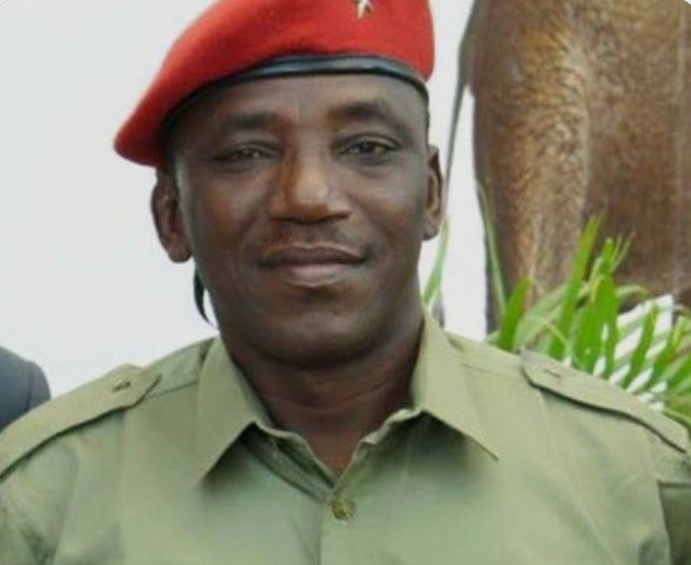
Tinubu’s Government Can Track Critics But Not Terrorists” — Ex-Minister Dalung Blasts Administration Over Worsening Insecurity, Economic Hardship
June 6, 2026
Former Minister of Youth and Sports Development, Barrister Solomon Dalung, has launched a scathing attack on President Bola Tinubu’s administration, accusing the Federal Government of lacking the political will to confront the escalating insecurity crisis ravaging Nigeria.
Speaking during an interview on Arise Television, Dalung painted a grim picture of a nation under siege, alleging that while the government appears highly efficient at monitoring and targeting political opponents and critics, it has failed to demonstrate the same determination in tracking down terrorists, bandits, kidnappers and other criminal elements terrorising communities across the country.
According to the former minister, the Tinubu administration has become excessively focused on political calculations ahead of the 2027 general elections, while ordinary Nigerians continue to suffer daily attacks, abductions and killings.
Dalung argued that the persistent wave of insecurity across several parts of the country is not a consequence of inadequate resources or intelligence but rather a reflection of the government's failure to make national security its highest priority.
“The government has shown capacity in monitoring critics and political opponents, yet terrorists continue to operate freely across vast territories. This raises serious questions about political will and commitment,” he said.
The outspoken former minister further alleged that powerful political interests and influential cabals have entrenched themselves within the system, undermining effective governance and frustrating genuine efforts to address the nation's security challenges.
Dalung also took aim at the Minister of Information and National Orientation over a recent appeal urging Nigerians to unite against terrorism and insecurity.
Describing the appeal as “embarrassing,” “demoralising,” and “an admission of failure,” he insisted that combating terrorism remains the primary constitutional responsibility of government and should not be shifted to ordinary citizens.

According to him, such statements expose the inability of state institutions to effectively discharge their obligations and further weaken public confidence in the government's capacity to protect lives and property.
“The government asking citizens to unite against terrorists is an indirect confession that it has failed in its primary responsibility,” Dalung stated.
In one of his most striking observations, Dalung claimed that terrorist groups and bandits have become so deeply entrenched that they now operate what he described as a “parallel forest economy.”
He argued that criminal networks have established independent systems of survival and financing in remote areas, enabling them to sustain operations beyond the reach of government authority.
According to him, these groups have effectively carved out territories where they impose their own rules, generate revenue and maintain logistical structures without significant interference from state security agencies.
“This parallel economy has allowed criminal groups to survive, recruit and expand their operations while the state struggles to assert control,” he warned.
Dalung also expressed scepticism about the effectiveness of Nigeria’s foreign security partnerships, particularly with the United States.
Questioning the impact of foreign military assistance, he argued that Nigerians have yet to witness meaningful improvements despite repeated assurances that international partners are supporting the country's counterterrorism efforts.
“We were told that the Americans are here with us. If the Americans are here with us, what have they been doing? We have not felt their impact,” he said.
The former minister urged the government to reconsider its security strategy by empowering local communities and grassroots structures to play a greater role in protecting themselves, rather than relying solely on external partnerships and official reassurances.
Beyond the security situation, Dalung offered a harsh assessment of President Tinubu’s three years in office, arguing that the administration has failed to translate its reform agenda into tangible improvements in the lives of ordinary Nigerians.
He criticised what he described as an endless cycle of explanations, excuses and economic theories, insisting that citizens are yet to experience the promised benefits of key reforms introduced by the government.
Dalung noted that rising inflation, worsening poverty, high energy costs and declining purchasing power have left millions of Nigerians struggling to survive.
“Three years into his tenure, it is still blame games and rhetoric about reforms. Nigerians have not seen the benefits. Instead, people are becoming poorer by the day. The economy is in distress, and insecurity remains a recurring talking point rather than a problem being solved,” he stated.
Looking ahead to the 2027 presidential election, Dalung warned that Nigeria may be drifting back toward the divisive regional politics that characterised the First Republic.
He predicted heightened political tension as various geopolitical zones position themselves to produce presidential candidates, potentially deepening ethnic and regional rivalries.
According to him, the growing competition among regional blocs could create significant political uncertainty if national leaders fail to prioritise unity and good governance over partisan interests.
“There will be serious confusion because virtually every region is preparing to produce a presidential candidate. What we are seeing resembles the regional politics of the First Republic,” he cautioned.
Dalung’s comments come amid increasing public debate over the state of the nation, with concerns mounting over insecurity, economic hardship and the direction of governance under the current administration.
While supporters of President Tinubu maintain that ongoing reforms require time to yield results, critics argue that the government must urgently deliver measurable improvements in security and economic wellbeing to restore public confidence.
We keep you informed and involved with anything from breaking news to thought-provoking opinion articles.