Explosions heard all over Iran as US strikes ...... Welcome to Glintnews......
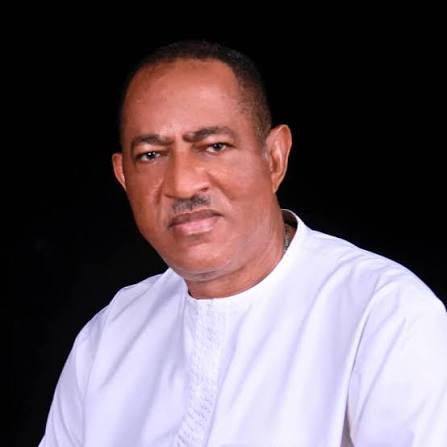
Gilbert Nnaji: The Quiet Architect of Development Redefining Representation in Enugu East Since 1999
By Glintnews Special Correspondent
In the evolving story of Nigeria’s democratic journey since 1999, few names in Enugu State resonate with as much enduring impact, consistency, and silent effectiveness as Senator Gilbert Emeka Nnaji. Widely regarded by constituents and observers alike as one of the most accomplished legislators to have represented Enugu East Senatorial District, Nnaji’s legacy stands as a compelling model of people-centered governance, visionary leadership, and measurable development.
A Life Dedicated to Service
Born on July 18, 1966, in Enugu, Nnaji’s journey into public service began long before his emergence on the national stage. Educated at Amorji-Nike Community School and Union Secondary School, Awkunanaw, he later obtained a degree in Banking and Finance from the University of Nigeria Nsukka.
His early leadership credentials were firmly established when he served as a three-term Chairman of Enugu East Local Government Area between 1996 and 2003—remarkably spanning both military and democratic administrations. This rare continuity underscored his administrative competence and the trust he commanded across political divides.
A Distinguished Legislative Career
Nnaji’s national legislative career began in 2003 when he was elected into the House of Representatives, where he served until 2011. During this period, he distinguished himself as Deputy Majority Leader and later as Chairman of the House Committee on Commerce.
His elevation to the Senate in 2011 marked the beginning of an even more impactful phase. Representing Enugu East Senatorial District until 2019, he served as Chairman of the Senate Committee on Communications for eight years—one of the most strategic committees in Nigeria’s push toward a digital economy.
Driving Nigeria’s ICT Revolution
As Committee Chairman, Nnaji emerged as a strong advocate for technological advancement and digital inclusion. His legislative footprint includes sponsoring critical initiatives such as:
Motion on the Integration of ICT in Secondary School Curricula
Bill for the Establishment of the Information and Communication Technology University of Nigeria
These interventions reflected his belief that technology-driven education is central to building a knowledge-based economy in Nigeria.
He also played a pivotal role in national policy debates, including his principled opposition to the proposed Communications Service Tax, which would have placed additional financial burdens on millions of Nigerians.
Transformational Projects Across Communities
What truly distinguishes Senator Nnaji’s legacy is the breadth and depth of his constituency projects—spanning education, healthcare, infrastructure, and economic empowerment.
Across Enugu State and beyond, his interventions include:
Over 46 solar-powered ICT laboratories in public secondary schools
ICT mega facilities in all tertiary institutions within the state
Three world-class e-libraries, including at Godfrey Okoye University and the University of Nigeria
Rural ICT centers and digital learning hubs
Construction of classroom blocks, civic centers, and sanitation facilities
In healthcare, his footprint is equally profound:
Establishment of hospitals and health centers across multiple LGAs
A landmark General Hospital in Ndiagu-Obuno-Akpugo
Several cottage hospitals and primary healthcare centers
Infrastructure development under his watch includes roads, electrification projects across more than 15 communities, transformers, and even a personally funded bridge in Amafor-Ugbawka.
Empowerment Without Noise
Unlike many public figures, Nnaji’s philanthropy has largely remained understated. Yet, its impact is undeniable:
Sponsorship of 1,200 students’ WAEC fees in 2013
Distribution of 210 tricycles, 120 refrigerators, and 100 generators
Provision of transformers and other economic support tools
Job placements, scholarships, and continuous youth empowerment initiatives
His philosophy appears simple but powerful: deliver results without fanfare.
A Voice for Justice and Accountability
Beyond infrastructure, Nnaji demonstrated courage in legislative advocacy. From addressing national tragedies like the Nimbo massacre to challenging institutional decisions and defending vulnerable communities, he consistently used his platform to amplify the voice of the people.
His intervention in correcting the erroneous classification of the Ozalla-Agbani-Ugbawka road as “completed” by federal authorities stands as a testament to his vigilance and commitment to accountability.
Recognition and Honors
In recognition of his contributions to education and public service, Nnaji was awarded an honorary doctorate degree in Political Science by Godfrey Okoye University in 2015. He has also received numerous accolades from reputable bodies including the Rotary Club and the Knights of St. John International.
Beyond Politics
Outside public office, Senator Nnaji is the Chief Executive Officer of Dun-Gee Hotels Limited, maintaining a strong presence in Nigeria’s hospitality sector while continuing to contribute to economic growth and job creation.
The Benchmark of Representation
In assessing the quality of representation in Enugu East since Nigeria’s return to democracy in 1999, Senator Gilbert Nnaji’s record stands out for its consistency, scale, and sustainability. His approach—blending legislative excellence with grassroots development—has set a benchmark that few have matched.
At a time when public trust in leadership is often tested, Nnaji’s legacy offers a compelling counter-narrative: that of a leader who not only understands the needs of his people but consistently delivers on them.
Indeed, judged with an open mind, Senator Gilbert Nnaji remains not just a former lawmaker, but a symbol of dependable leadership—one whose impact continues to shape lives across generations.
We keep you informed and involved with anything from breaking news to thought-provoking opinion articles.