Explosions heard all over Iran as US strikes ...... Welcome to Glintnews......
Nuclear Threat Rising Despite Declining Warhead Numbers, Global Researchers Warn
June 8, 2026
The world may possess fewer nuclear weapons than during the height of the Cold War, but the risk of a nuclear crisis is becoming increasingly alarming, according to a new report released by the renowned Stockholm International Peace Research Institute (SIPRI).
Researchers have warned that nuclear-armed nations are no longer simply maintaining their arsenals; many are actively modernising them, deploying more warheads on operational delivery systems, and increasing the strategic role of nuclear weapons in global security policies.
The findings have intensified fears of a renewed global arms race at a time when geopolitical tensions are escalating across several regions of the world.
According to SIPRI, the world's nine nuclear-armed states collectively possess an estimated 12,187 nuclear warheads. Of this number, approximately 9,745 warheads remain in military stockpiles and are available for potential use.
Although the total number of nuclear weapons has declined slightly compared to previous years, experts caution that the reduction should not be mistaken for improved global security.
For decades following the Cold War, old nuclear warheads were dismantled faster than new ones were produced or deployed, leading to a gradual decrease in global stockpiles. However, researchers now believe this trend may soon reverse.
SIPRI Director Karim Haggag stressed that the world should focus less on the overall number of weapons and more on the growing risks associated with their deployment.
“Even though there are fewer nuclear weapons globally, the level of nuclear danger and nuclear risk is increasing,” Haggag warned.
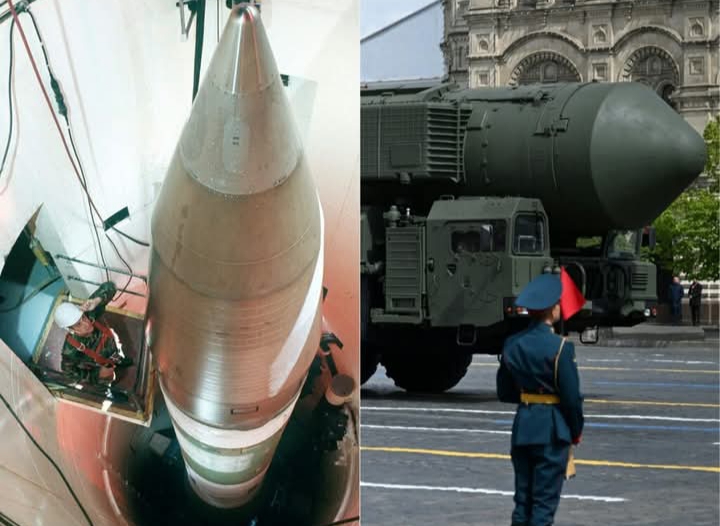
One of the most concerning developments identified in the report is the growing tendency of nuclear powers to move warheads from storage facilities onto missiles, submarines, aircraft and other delivery systems.
This means that more weapons are becoming operationally available, reducing response times during crises and potentially increasing the likelihood of escalation during international conflicts.
Experts fear that such deployments make nuclear arsenals more central to military planning and strategic competition among major powers.
The report also highlights the gradual collapse of several international arms-control frameworks that helped limit nuclear competition for decades.
The expiration of key agreements, combined with worsening relations among major powers, has weakened mechanisms designed to prevent nuclear escalation.
Researchers warn that the erosion of diplomatic safeguards is occurring at the same time that countries are investing heavily in advanced nuclear technologies, creating a dangerous combination that could destabilise global security.
The United States and Russia continue to possess the overwhelming majority of the world's nuclear weapons.
Together, the two nations account for approximately 83 percent of the global nuclear arsenal, with each country maintaining more than 5,000 nuclear warheads.
Both governments are undertaking extensive modernisation programmes aimed at upgrading their aging nuclear forces. However, these efforts have encountered significant obstacles.
SIPRI noted that the United States has experienced planning difficulties, budget overruns and funding challenges that could further increase the cost and delay the completion of its nuclear modernisation initiatives.
Russia, meanwhile, has faced setbacks including failed tests of intercontinental ballistic missiles and mounting economic pressures linked to international sanctions and the prolonged war in Ukraine.
Among all nuclear powers, China is currently expanding its nuclear arsenal faster than any other nation.
SIPRI estimates that China now possesses approximately 620 nuclear warheads, a figure that has risen steadily in recent years.
The institute projects that China could potentially possess as many intercontinental ballistic missiles as the United States and Russia by 2030, depending on how Beijing structures its strategic forces.
According to Haggag, growing geopolitical competition is driving China's nuclear expansion.
“Intensifying geopolitical competition creates strong incentives for China to increase its reliance on nuclear weapons,” he explained.
Even if China's stockpile reaches 1,000 warheads by the end of the decade, it would still remain significantly smaller than those of the United States and Russia.
In Europe, both France and the United Kingdom have maintained relatively stable arsenals.
France is estimated to possess around 290 nuclear warheads, while the United Kingdom maintains approximately 225 warheads.
However, SIPRI noted that both countries are signalling a greater emphasis on nuclear deterrence.
French President Emmanuel Macron has directed efforts to strengthen France's nuclear capabilities, while the UK has previously announced plans that could allow its stockpile to increase in the coming years.
The report also highlights ongoing developments in South Asia, where regional rivals continue to strengthen their strategic capabilities.
India is believed to have increased its arsenal slightly to approximately 190 nuclear warheads, while neighbouring Pakistan maintains an estimated 170 warheads.
Although Pakistan's arsenal has remained relatively stable, researchers observed that the country continues to accumulate fissile materials used in nuclear weapons production, suggesting the potential for future expansion.
Security analysts warn that tensions between the two nuclear-armed neighbours remain a significant concern for international stability.
North Korea continues to pursue what its leadership describes as an “exponential” expansion of its nuclear programme.
SIPRI estimates that Pyongyang currently possesses around 60 nuclear warheads and remains committed to strengthening both its weapons stockpile and missile capabilities.
Meanwhile, Israel, which has never officially confirmed possessing nuclear weapons, is also believed to be modernising its nuclear arsenal.
Researchers estimate that Israel maintains approximately 90 nuclear warheads, although the exact size and capabilities of its stockpile remain closely guarded.
The SIPRI report paints a troubling picture of a world entering a new nuclear age marked by strategic competition, declining arms-control agreements and accelerated weapons modernisation.
While the total number of warheads remains lower than during the Cold War, experts warn that the increasing deployment of operational weapons, combined with growing geopolitical tensions, could create a more dangerous international environment.
As nations continue to expand and upgrade their arsenals, researchers caution that global leaders must prioritise diplomacy, arms-control negotiations and conflict prevention efforts to reduce the risk of a nuclear confrontation.
For many observers, the warning is clear: the world may have fewer nuclear weapons than before, but the possibility of their use is becoming an increasingly serious concern.
We keep you informed and involved with anything from breaking news to thought-provoking opinion articles.