Explosions heard all over Iran as US strikes ...... Welcome to Glintnews......
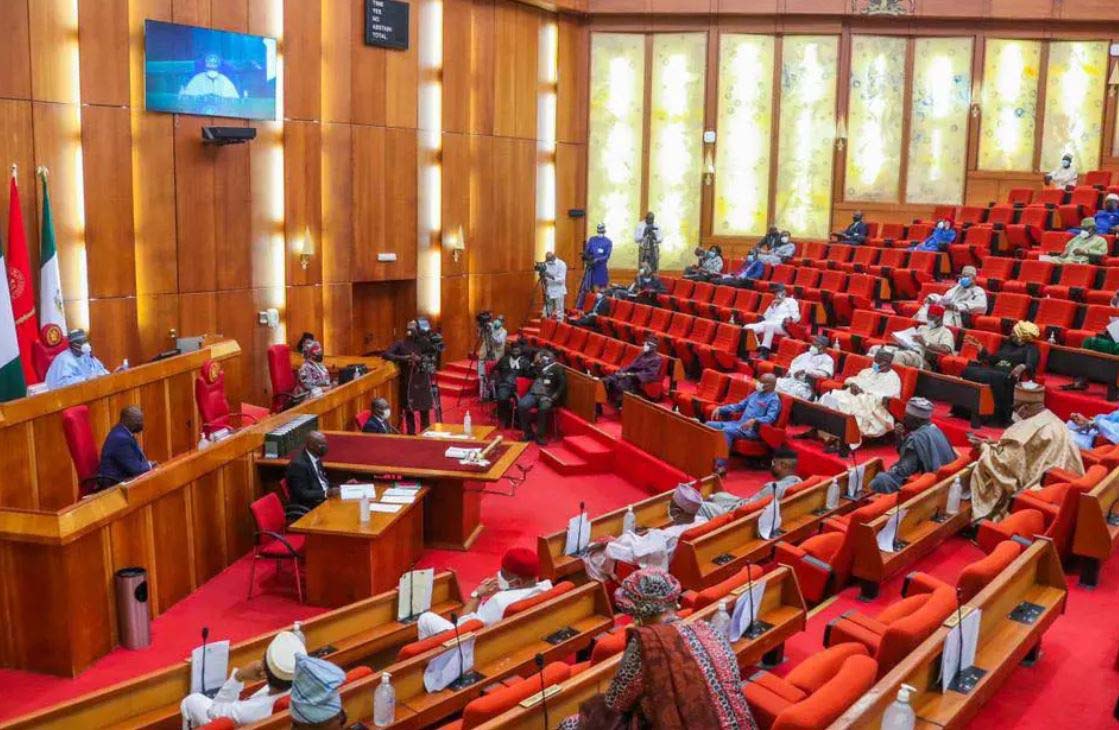
Senate Approves Constitutional Amendment to Establish State Police Across Nigeria
Nigeria has moved a significant step closer to restructuring its security architecture after the Nigerian Senate passed a constitutional amendment bill seeking to establish state police across the federation. The development marks one of the most consequential constitutional reforms in the country's democratic history and could fundamentally alter the way law enforcement is managed across the nation's 36 states.
The bill, formally titled the Constitution of the Federal Republic of Nigeria (Alteration) State Police Bill, 2026, was approved during plenary presided over by Senate President Godswill Akpabio. The legislation seeks to decentralise policing by allowing state governments to establish and operate their own police services while maintaining the existing federal policing structure.
A Historic Shift From Centralised Policing
Since independence, Nigeria has operated a highly centralised policing system under the control of the Federal Government through the Nigeria Police Force. Over the years, critics have argued that the arrangement has become increasingly inadequate in addressing the country's complex and evolving security challenges.
From insurgency in the North-East and banditry in the North-West to kidnapping, communal violence, farmer-herder conflicts, and separatist unrest in parts of the South-East, security threats have continued to stretch the capacity of the federal police force. Supporters of state policing argue that locally controlled police formations would possess better knowledge of their communities, languages, terrain, and security dynamics, enabling faster and more effective responses to crime.
The reform has received strong backing from President Bola Ahmed Tinubu, who described the proposal as a critical step toward strengthening Nigeria's internal security framework. According to the presidency, the constitutional amendment is designed to address emerging security threats through a dual policing system that allows both federal and state authorities to share law enforcement responsibilities.
Key Provisions of the Bill
Under the proposed amendment, Nigeria would formally adopt a dual policing structure consisting of Federal Police and State Police services. Each state would have the constitutional authority to establish its own police force, provided it meets national standards prescribed by federal legislation.
Among the notable provisions are:
Recognition of both Federal and State Police within the Constitution.
Authority for state governments to establish and manage their own police services.
Powers for governors to appoint State Police Commissioners in accordance with constitutional guidelines.
Retention of federal jurisdiction over matters such as counter-terrorism, border security, organised crime, and national security operations.
Requirement that state police organisations meet minimum operational and professional standards before commencing operations.
Reduced federal interference in the day-to-day operations of state police services.
Security experts believe the framework could significantly improve intelligence gathering and crime prevention at the grassroots level, where many security threats originate.
Why Many Nigerians Support State Police
The call for state police has persisted for decades, particularly among governors, traditional rulers, security experts, and civil society groups who argue that policing should be closer to the people.
Advocates point to the success of regional security outfits such as Amotekun and various community policing initiatives, which have demonstrated the benefits of local intelligence and rapid response capabilities.
Supporters also contend that the current federal police force is severely overstretched. With a population exceeding 220 million people, Nigeria's police-to-citizen ratio remains below international recommendations, leaving many rural communities with little or no security presence.
Concerns Over Political Abuse
Despite widespread support, the proposal has generated concerns among critics who fear that governors could misuse state police forces to intimidate political opponents, suppress dissent, or influence elections.
Human rights advocates have repeatedly warned that without strong oversight mechanisms, decentralised policing could create opportunities for political interference in law enforcement.
Questions have also been raised regarding funding, training standards, accountability, and the ability of less financially viable states to sustain professional police services. Some analysts warn that disparities in state resources could lead to uneven policing standards across the country.
To address these concerns, lawmakers say the constitutional framework includes safeguards and national regulatory standards intended to ensure professionalism and prevent abuse.
What Happens Next?
Although the Senate's approval represents a major breakthrough, the proposal has not yet become law.
Under Nigeria's constitutional amendment process, the bill must secure ratification by at least two-thirds of the country's State Houses of Assembly before it can be transmitted for presidential assent. This means a minimum of 24 state legislatures must approve the amendment before the reform can take effect.
If successfully ratified and signed into law, the amendment would represent the most significant restructuring of Nigeria's policing system since the country's return to democratic rule in 1999 and could redefine how security is managed across the federation for decades to come.
We keep you informed and involved with anything from breaking news to thought-provoking opinion articles.