Nigeria to Battle DRC today by 8:00Pm......
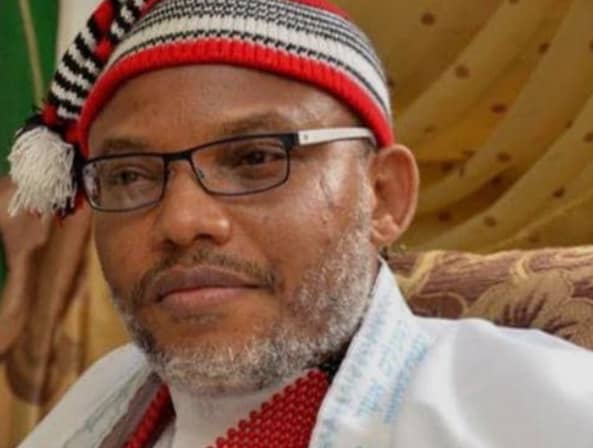
Nnamdi Kanu Faces Death Sentence: Is It the End of the Road for Biafra Agitation and the Igbo Questions ?
The long-running trial of Nnamdi Kanu, leader of the Indigenous People of Biafra (IPOB), reached a dramatic turning point in Abuja on Thursday as the Federal High Court convicted him on all seven terrorism-related charges filed by the Nigerian government.
Justice James Omotosho ruled that the prosecution had proved its case beyond reasonable doubt, finding Kanu guilty of offences under the Terrorism Prevention Act that include incitement, issuing and enforcing sit-at-home orders, and broadcasts deemed to threaten Nigeria’s unity.
Following the conviction, government lawyers urged the court to impose the maximum penalty – the death sentence – under the relevant provisions of the law. Sentencing is expected after allocutus and further submissions by both sides.
While the final sentence is still pending, Thursday’s judgment has already intensified debate about the future of IPOB, the broader Biafra agitation, and the longstanding grievances among many in Nigeria’s South-East.
A Tense Day in Court
The proceedings were broadcast live across Nigeria, drawing intense public interest at home and in the diaspora. The atmosphere in court turned heated when Kanu repeatedly demanded to know the specific legal provisions under which he was being tried and insisted on his right to file written addresses.
Justice Omotosho dismissed his fresh applications and ordered that the trial proceed. At a point, after repeated interruptions, the judge directed security operatives to remove Kanu from the courtroom for what he described as “unruly” conduct, and the judgment continued in his absence.
Rights activists and some legal commentators have criticised aspects of the process, arguing that proceeding in the defendant’s absence raises questions about fair-trial standards and judicial discretion, while others say the court acted within its powers to maintain order.
A Case Marked by Arrests, Flight and Rendition
Kanu’s legal journey has spanned nearly a decade and multiple courts.
He was first arrested in 2015 on charges including treasonable felony over his role in IPOB and his Radio Biafra broadcasts.
After spending over a year in detention, he was granted bail in 2017.
In September 2017, his home in Umuahia, Abia State, was raided during a military operation. He later disappeared from public view and resurfaced abroad, with widely reported footage placing him in Israel.
In June 2021, he was arrested overseas and returned to Nigeria in a controversial operation that his lawyers and supporters describe as an “extraordinary rendition” from Kenya, a characterization that has sparked human-rights concerns and international criticism.
In 2022, the Court of Appeal in Abuja discharged him in relation to some of the charges and criticised the manner of his return to Nigeria, calling it unlawful. However, the Federal Government successfully appealed to the Supreme Court, which set aside the discharge and sent the case back to the Federal High Court for trial, even while acknowledging that the procedure of his return raised legal and diplomatic issues.
Kanu’s defence team has consistently argued that many of the counts against him are either unconstitutional, unknown to Nigerian law, or criminalise political speech and advocacy. They have also filed multiple motions challenging jurisdiction, the legality of his arrest and return, and the applicability of the terrorism law to his broadcasts and political activities.
Human-rights groups, civil society organisations and some political voices in the South-East have long described the prosecution as politically motivated and legally flawed, pointing to the earlier appellate decision, the circumstances of his return from Kenya, and the broader pattern of crackdowns on IPOB members and supporters.
They argue that the case has become a symbol of deeper grievances: perceived marginalisation of the South-East, economic exclusion, unresolved memories of the Biafran War, and distrust of federal institutions.
The Nigerian government, however, insists that the trial is fundamentally about security and the rule of law, not ethnicity or political opinion. Officials point to deadly attacks, enforcement of sit-at-home orders, killings of security personnel and civilians, and the disruption of economic life in the South-East, all allegedly linked to IPOB and its splinter armed networks.
Security analysts say the court’s decision reflects Abuja’s determination to send a strong message that what it sees as violent separatism and terrorism will be met with the full force of the law.
Will a Harsh Sentence End the Biafra Agitation?
The key question now is whether a possible death sentence or life imprisonment for Kanu would end, weaken or instead radicalise the Biafra movement.
An Ideology That Outlived the Civil War
The demand for Biafra predates Kanu by decades. The original secessionist attempt led to the Nigerian Civil War (1967–1970), in which an estimated three to Four million people died,mostly women and children whom died out of starvation and disease due to the blockade of food and drugs by the Nigeria government and her allies
For many in the South-East, Biafra today is as much an idea as a concrete political project – symbolising demands for justice, equal representation, economic inclusion, and acknowledgment of historical trauma.
Scholars of conflict and political movements often warn that attempting to suppress an ideology primarily through force and punitive measures can create new grievances, deepen mistrust, and push some supporters toward more radical or underground tactics.
IPOB’s Global Network and Chain of Command
IPOB operates as a registered movement in many jurisdictions, and maintains a visible presence on social media and among diaspora communities across Europe , Asia and North America.
The group has a structured leadership and an international directorate that, in principle, allows for continuity even if its founder is imprisoned. Analysts note that if Kanu is removed from the scene, other figures could step forward to lead the agitation, potentially with different tactics and internal dynamics.
This raises a crucial point: sentencing one individual may not automatically dismantle a movement that claims to speak for millions of people in the region, even if government pressure weakens its organisational capacity at home.
Igbo Identity, Federal Inclusion and the Unfinished Conversation
For many Igbo citizens, the trial is not just about IPOB; it touches on broader questions of identity, fairness and belonging in the Nigerian federation.
Key concerns often raised include:
Representation in national leadership and perceptions that the South-East has been under-represented in key security and political positions.
Infrastructure and investment gaps, with complaints about poor federal roads, under-funded industries and limited federal projects compared to other regions.
Historical wounds, particularly the legacy of the civil war and the perception that Nigeria has never fully addressed its impact on the Igbo population.
These issues are frequently cited by those who, while not necessarily supporting IPOB’s methods or rhetoric, argue that the federal government must open a genuine political dialogue with the region to address longstanding grievances.
Legal Battle Not Over, Political Questions Unresolved
Even after conviction, Kanu’s legal team is expected to explore appeal options at higher courts, challenging both the verdict and any eventual sentence. That process could take months or years and may once again test the Nigerian judiciary’s handling of high-profile political and security cases.
At the same time, politicians, religious leaders, traditional rulers and civic actors in the South-East and beyond face a delicate task: how to calm tensions, discourage violence and criminality, and still push for reforms and dialogue that address genuine complaints.
Many analysts argue that:
A purely security-driven approach risks perpetuating a cycle of crackdowns and reprisals.
A purely political solution that ignores accountability for violence would also be unsustainable.
Nigeria will ultimately need a balanced mix of justice, constitutional reform, economic inclusion and honest conversation about its past to reduce separatist sentiment over the long term.
Has Nigeria Defeated IPOB by Targeting One Man?
The Federal Government may secure a landmark conviction and possibly the harshest punishment available under the law, but experts say this does not automatically equal victory over the broader Biafra agitation.
Crucial questions remain:
Will the conviction deter new generations of agitators or further convince them that peaceful political engagement is impossible?
Can regional leaders and the federal government work together on governance, security and development to undercut the appeal of separatist narratives?
Will the case deepen ethnic tensions or encourage a more nuanced national discussion on equity, federalism and minority rights?
What is clear is that sentencing Nnamdi Kanu – whether to death or to a long prison term – cannot by itself resolve decades-old disputes over identity, justice and power in Nigeria.
The coming days, as the court pronounced sentence and reactions spread across the South-East and the diaspora, will likely shape not just Kanu’s fate, but also the direction of one of the country’s most sensitive political and security challenges.
We keep you informed and involved with anything from breaking news to thought-provoking opinion articles.