Nigeria to Battle DRC today by 8:00Pm......
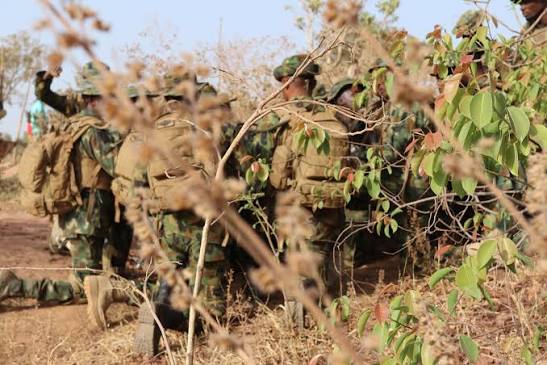
Kebbi, Nigeria — Tension has risen across the country after a Nigerian Army rescue team searching for the 25 schoolgirls abducted in Kebbi State was ambushed by terrorists on Tuesday, 18 November 2025, at about 9:30 a.m. Nigeria time, leaving at least six soldiers wounded and renewing concerns about security lapses in the ongoing fight against violent groups.

Read also: A Decade after Chibok School Girls Kidnap ,Terrorists Raid Girls’ School at Dawn, Abduct Students and Kill Staff Member In Nigeria
According to military sources familiar with the operation, the soldiers were advancing toward a forested area believed to be where the abductors were hiding when the attackers suddenly opened fire from concealed positions along a narrow route. The ambush forced the troops into immediate defensive action before reinforcements arrived.
One of the injured soldiers, identified as Private Musa, spoke from a medical facility where he is receiving treatment. He explained that the nature of the attack suggested the terrorists may have been aware of the troop movement ahead of time.
“We were moving carefully toward the forest when they opened fire from both sides,” he said. “It looked like they had information about our route.”
The incident has triggered widespread reaction across social media platforms, where many Nigerians expressed frustration over the repeated targeting of security personnel during rescue missions. Users online linked the persistent ambushes to what they described as long-standing weaknesses in Nigeria’s security system, with some commenters arguing that years of negotiations with armed groups have not yielded meaningful improvements in safety. Others questioned the process by which individuals claiming to be repentant fighters are reintegrated into society, suggesting that the policy requires stronger oversight to prevent abuse or misinterpretation.
An older interview involving a former Chief of Defence Staff resurfaced during the online debate, in which the official discussed rehabilitation approaches for former fighters. Many Nigerians reacted strongly to the clip, saying it highlighted deep public concerns about reintegration programs. Analysts, however, note that reintegration is part of global counter-insurgency strategy and must be implemented carefully to avoid misunderstanding or mistrust among communities.
Security experts who reviewed the details of the Kebbi ambush said it underscores the broader challenge of intelligence leaks and operational sabotage, an issue that has long complicated Nigeria’s counter-terrorism efforts. One Lagos-based analyst noted that the precision of the attack raises questions about how armed groups obtain sensitive information. He stressed that such incidents point to the urgent need for stronger surveillance systems, secure communication channels, and tighter internal coordination across security agencies.
For now, the Nigerian Army has not released an official statement on the attack or the condition of the wounded soldiers. Military operations are reportedly continuing in the forest regions of Kebbi with additional units deployed to support the search-and-rescue mission for the kidnapped schoolgirls. Families of the abducted children remain anxious, with many parents gathering at police and military facilities each day to request updates and plead for swift action.
The abduction of schoolchildren in northern Nigeria has remained a recurring tragedy for over a decade, prompting concerns from both local and international observers. Human rights organizations have condemned the growing trend, warning that repeated attacks on schools—combined with the fear generated by kidnappings—are discouraging parents from sending their children to class and threatening long-term educational development in affected regions.
Diplomatic sources say that global partners are monitoring the situation closely due to the rising sophistication of terrorist groups in West Africa. Earlier reporting by Glint News indicated that discussions are ongoing between Nigerian authorities and foreign governments regarding enhanced cooperation in intelligence, surveillance, and counter-terrorism strategy. While no country has announced plans for direct military involvement, international partners have expressed concern over the deteriorating security conditions and the humanitarian implications of continued mass abductions.
Local community leaders in Kebbi have urged the Nigerian government to deploy additional technological tools—including aerial surveillance and modern tracking systems—to support the rescue effort and prevent further attacks on security personnel. Advocacy groups are also calling for a full investigation into how the ambush occurred, arguing that addressing operational weaknesses is key to protecting both civilians and military personnel.

As the search for the abducted schoolgirls enters another day, many Nigerians are hoping for a breakthrough in the rescue operation. The attack on the soldiers has intensified public calls for stronger leadership, improved coordination across security agencies, and long-term reforms that can prevent violent groups from exploiting gaps in the nation’s defense structure. For the families waiting for their daughters to return home, the situation remains painful and uncertain, but hopes for a successful rescue mission remain high as additional forces continue to comb the forests of Kebbi State.
We keep you informed and involved with anything from breaking news to thought-provoking opinion articles.