Explosions heard all over Iran as US strikes ...... Welcome to Glintnews......
June 13, 2026
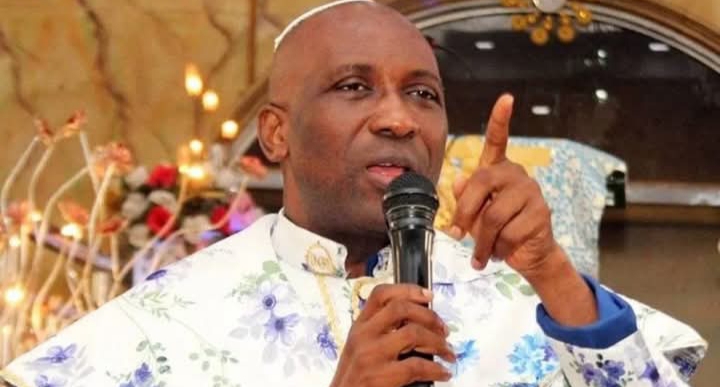
The Leader of the INRI Evangelical Spiritual Church, Primate Elijah Ayodele, has called on the Federal Government to release the detained leader of the Indigenous People of Biafra (IPOB), Nnamdi Kanu, arguing that justice must be applied fairly and consistently to all citizens irrespective of their ethnic, religious, or political affiliations.
The outspoken cleric made the remarks during a church service, where he addressed a range of national issues including governance, security, national unity, and public confidence in state institutions. A video of his comments, which surfaced online on Saturday, has since generated discussions across social media platforms and political circles.
Primate Ayodele's intervention comes at a time when debates surrounding Kanu's continued detention remain a major topic of national discourse, drawing reactions from political leaders, traditional rulers, religious figures, civil society organizations, legal practitioners, and various interest groups across Nigeria.
According to the cleric, the Federal Government should either release Kanu or ensure that similar standards are applied to other controversial public figures who have also attracted public scrutiny.
"Try and release Nnamdi Kanu," Ayodele stated while addressing members of his congregation.
He further referenced Islamic cleric Sheikh Ahmad Gumi, arguing that perceptions of unequal treatment by authorities could create divisions and erode public trust in the nation's justice system.
The religious leader stressed that one of the greatest challenges facing any democratic society is the perception that laws are applied differently depending on who is involved.
According to him, governments strengthen public confidence when they demonstrate fairness, impartiality, and consistency in handling sensitive cases.
Ayodele maintained that Nigerians are paying close attention to how government institutions address matters relating to security, political dissent, and national unity.
He warned that perceived selective enforcement of laws could fuel public dissatisfaction and deepen existing tensions across various parts of the country.
Political analysts have often argued that public trust in institutions is closely linked to the belief that justice is administered without prejudice. The cleric's comments appear to echo concerns expressed by some stakeholders who believe that national unity can only be strengthened when citizens feel they are treated equally before the law.
The detention of Nnamdi Kanu has remained one of Nigeria's most debated political and legal issues in recent years.
Kanu, who leads the Indigenous People of Biafra, has been at the center of a prolonged legal battle involving allegations brought against him by the Federal Government. His supporters continue to argue that his continued detention has contributed to political tensions in the South-East region, while government authorities have consistently maintained that legal processes must be allowed to take their course.
Over the years, several prominent Nigerians—including political leaders, governors, lawmakers, traditional rulers, religious leaders, and civil society groups—have made calls for dialogue and political solutions to complement ongoing judicial proceedings.
The issue has also attracted international attention, with various human rights organizations and advocacy groups monitoring developments surrounding the case.
Despite the differing opinions on the matter, Kanu's detention remains a recurring subject in discussions about national reconciliation, federalism, security, and political inclusion.

During his address, Primate Ayodele emphasized the need for leaders at all levels to prioritize actions capable of promoting peace and strengthening national cohesion.
He argued that Nigeria's diversity should be viewed as a source of strength rather than division and called for greater efforts to address grievances through dialogue and engagement.
According to him, unresolved political and social concerns have the potential to generate frustration among sections of the population if not properly managed.
The cleric warned that authorities should pay close attention to public sentiments and adopt measures that encourage inclusiveness and mutual understanding.
He further noted that issues relating to justice and fairness often have far-reaching implications for national stability, especially in a country as diverse as Nigeria.
Ayodele's comments represent the latest example of religious leaders weighing in on major national issues beyond spiritual matters.
In recent years, clerics from different faith backgrounds have increasingly spoken on governance, security challenges, economic conditions, corruption, electoral reforms, and national unity.
Observers note that religious leaders often command significant followings and influence public opinion, making their interventions an important part of Nigeria's socio-political landscape.
While some view such contributions as valuable in promoting accountability and social justice, others argue that religious figures should exercise caution when commenting on politically sensitive matters.
Nevertheless, voices from faith communities continue to play a visible role in shaping conversations around national development and governance.
The latest appeal by Primate Ayodele adds to a growing list of calls from various quarters urging the Federal Government to explore broader avenues for resolving issues surrounding Kanu's case.
Supporters of dialogue argue that political engagement and reconciliation could contribute to lasting peace, particularly in regions where tensions remain high.
On the other hand, advocates of a strict legal approach insist that the rule of law must be upheld and that judicial institutions should be allowed to determine the outcome of ongoing proceedings without external pressure.
The differing perspectives reflect the complexity of a case that has evolved beyond legal arguments to become a broader discussion about national unity, justice, security, and democratic governance.
As debates continue, analysts believe that the Federal Government faces the challenge of balancing legal obligations, national security considerations, and growing calls for political solutions.
For many Nigerians, the central question extends beyond the fate of any single individual. It touches on broader concerns about equality before the law, public confidence in institutions, and the ability of the nation to manage contentious issues through democratic processes.
Primate Ayodele's remarks have once again brought these issues into public focus, reinforcing ongoing conversations about fairness, accountability, and the future of national cohesion in Africa's most populous nation.
Whether his call gains further political traction remains to be seen, but it has undoubtedly added another influential voice to one of the country's most enduring and closely watched national debates.
We keep you informed and involved with anything from breaking news to thought-provoking opinion articles.