Explosions heard all over Iran as US strikes ...... Welcome to Glintnews......
Constitutional Amendment Bill Proposes 157 New Legislative Seats Reserved Exclusively for Women in Nigeria
June 11, 2026
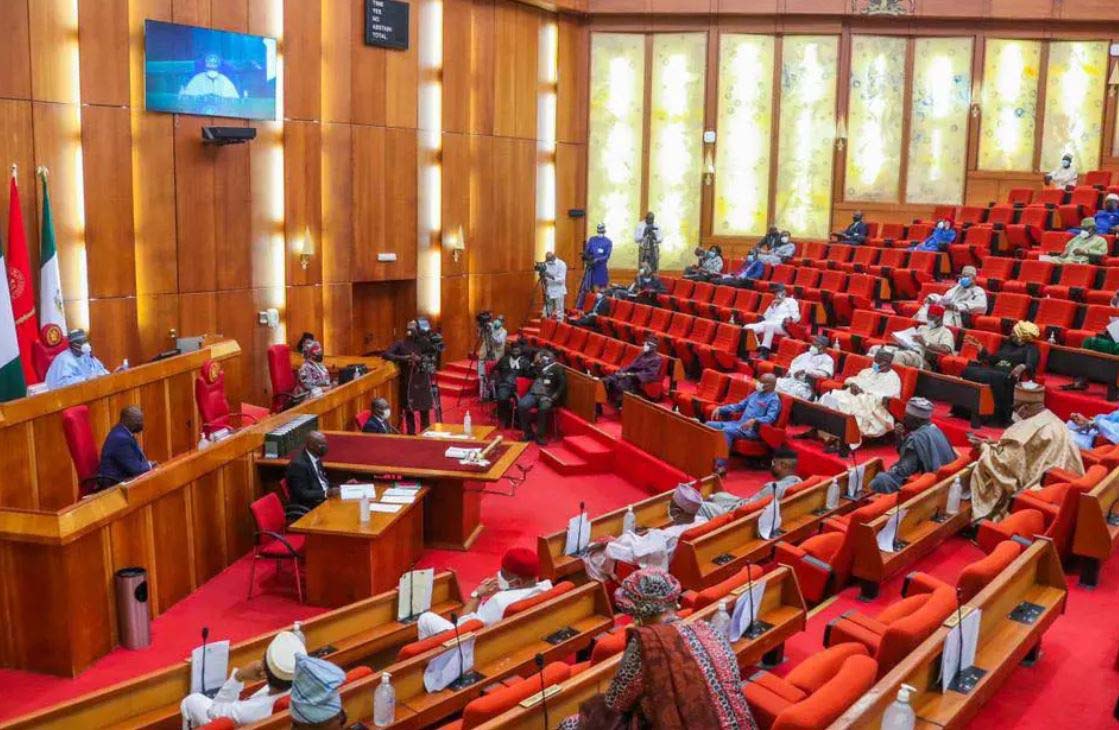
A landmark constitutional amendment bill aimed at significantly increasing women's participation in Nigeria's political landscape has proposed the creation of 157 additional legislative seats reserved exclusively for women across the National Assembly and the 36 State Houses of Assembly.
If passed into law, the proposal would mark one of the most far-reaching affirmative-action reforms in Nigeria's democratic history, creating new pathways for female political representation while seeking to address the long-standing gender imbalance in governance.
Under the proposed amendment, 12 new seats would be added to the Senate, 37 additional seats would be created in the House of Representatives, while each of the country's 36 State Houses of Assembly would receive three extra seats reserved solely for women. This would bring the total number of newly created positions to 157 nationwide.
According to details of the bill, the Senate would retain its current constitutional structure of three senators from each state and one senator representing the Federal Capital Territory (FCT). However, the upper legislative chamber would be expanded through the addition of two special seats for women in each of Nigeria's six geo-political zones.
This arrangement would result in the creation of 12 additional Senate seats exclusively for female lawmakers.
The bill further provides that these seats would rotate among states within each geo-political zone based on guidelines to be determined through an Act of the National Assembly.
In the House of Representatives, membership would increase from the current 360 seats to 397 seats through the creation of one special constituency seat for a woman in every state of the federation and the FCT.
Unlike existing federal constituencies, these special seats would not be tied to constituency delineation exercises and would exist as separate representation structures specifically designed to enhance women's participation in national politics.
At the state level, each House of Assembly would gain three new seats reserved exclusively for women.

The proposed allocation would ensure that each senatorial district within a state is represented by one female legislator occupying a special seat.
Across the 36 states, this would amount to 108 newly created positions for women in state legislatures.
Supporters of the bill argue that the move could dramatically improve female representation at grassroots and sub-national levels, where women have historically struggled to secure elective positions.
One of the most notable features of the bill is the introduction of a unique Electoral College system for selecting occupants of the special seats.
Rather than being elected through direct voting by the general public during regular elections, candidates for the women-only positions would emerge through Electoral Colleges established in each state and the FCT.
The Electoral Colleges would comprise local government chairpersons, vice-chairpersons, councillors, members of State Houses of Assembly, members of the House of Representatives and senators from the respective states. In the Federal Capital Territory, Area Council officials would perform the roles assigned to local government representatives.
Each Electoral College member would be entitled to one vote, while elections would be conducted through secret balloting under the supervision of the Independent National Electoral Commission (INEC).
The bill stipulates that only women sponsored by registered political parties would be eligible to contest for the special seats.
Candidates must also satisfy all constitutional requirements applicable to members of the National Assembly and State Houses of Assembly, ensuring that qualification standards remain consistent with those governing conventional elections.
Women elected through the special-seat arrangement would enjoy the same constitutional status as lawmakers elected through regular constituency-based elections.
According to the proposal, holders of the additional seats would possess identical rights, privileges, immunities, responsibilities and tenure protections as their counterparts elected through direct voting.
The bill seeks to ensure that the special-seat holders are fully integrated into legislative activities without any distinction in authority or status.
The amendment also establishes a separate recall mechanism for lawmakers occupying the women-reserved seats.
Under the proposed framework, a recall process can only begin if at least half of the members of the relevant Electoral College sign a petition requesting the removal of the legislator.
Following verification by INEC, the recall would only succeed if at least two-thirds of Electoral College members vote in support of the removal through a secret ballot.
Beyond the creation of the new seats, the bill seeks extensive amendments to several sections of the Constitution.
The proposed changes would affect provisions relating to recall procedures, electoral timelines, election petitions, constituency delineation and the powers and responsibilities of INEC.
The amendment would also formally recognize and define key political concepts such as additional special seats, Electoral Colleges and geo-political zones.
For the first time, Nigeria's six geo-political zones and their constituent states would be explicitly listed within the Constitution.
According to the explanatory memorandum attached to the bill, the initiative is designed as a temporary affirmative-action mechanism aimed at correcting the persistent underrepresentation of women in Nigeria's political institutions.
Advocates argue that despite decades of democratic governance, women continue to occupy only a small fraction of elective positions across federal and state levels.
The proposed constitutional amendment seeks to create a structured pathway for greater female inclusion in governance while strengthening gender balance in decision-making processes.
If approved by the National Assembly and endorsed through the constitutional amendment process, the new arrangement would take effect from the first general election following its enactment.
The special-seat framework would remain operational for 16 years, after which it would undergo a constitutional review to determine its effectiveness and future relevance.
We keep you informed and involved with anything from breaking news to thought-provoking opinion articles.