Explosions heard all over Iran as US strikes ...... Welcome to Glintnews......
Excluding Somali Referee From World Cup is 'Form of Racism': Burundian Journalist
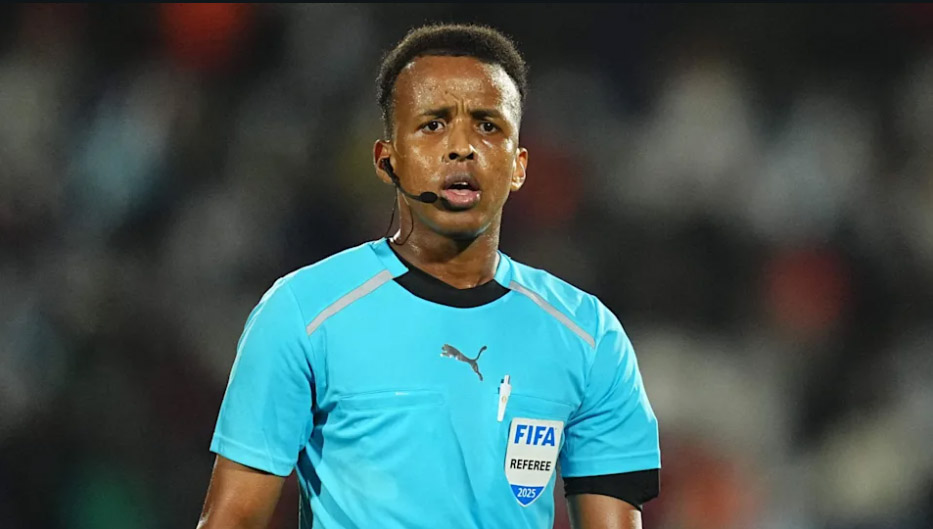
The decision by United States immigration authorities to deny entry to CAF Referee of the Year Omar Abdulkadir Artan ahead of the 2026 FIFA World Cup has ignited fierce international debate. Critics are sharply questioning the intersection of national security policies and global sports governance. Prominent Burundian journalist Omar Théodore Ntunga has forcefully condemned the move, labeling the exclusion of the highly decorated Somali international official as a thinly veiled "form of racism."
Ntunga’s comments come in the wake of Artan being turned back at Miami International Airport following an exhausting 11-hour immigration interview and subsequent detention by US Customs and Border Protection (CBP).
The 34-year-old referee, who held a diplomatic passport and a valid single-entry US visa, was poised to make history as the first-ever Somali match official to referee at a World Cup finals. Instead, he was subjected to expedited removal and repatriated via Turkey, leaving African football circles in a state of profound shock and indignation.
While acknowledging that the security of World Cup attendees, players, and host nations must be fiercely protected, Ntunga argued that there must be reasonable limits to how sovereign immigration laws are enforced during global spectacles.
He noted that while complex geopolitical tensions and strict immigration policies exist between Somalia and the United States, such friction should never be used as an excuse to systematically exclude an accredited sports official who has met every stringent professional standard set by FIFA and CAF.
The geopolitical backdrop of the incident is heavily tied to the Trump administration's sweeping travel bans enacted in June 2025, which place severe entry restrictions on citizens from 12 nations, including Somalia.
In defending the deportation, a US administration official stated anonymously that "derogatory information, including association with suspected members of terror organizations," had been uncovered during advanced vetting, rendering Artan a perceived threat under the Immigration and Nationality Act. CBP Commissioner Rodney Scott echoed this rigid stance, publicly asserting that the law applies universally regardless of a traveler’s high-profile profession.

However, Ntunga and other African media analysts view these generalized security assertions with deep skepticism, suggesting they reflect institutional biases that disproportionately penalize professionals from developing or politically unstable nations.
The Somali Football Federation and the country's Ministry of Youth and Sports have vehemently defended Artan’s integrity, describing his professional career as a milestone of unblemished dedication and calling the US actions an unjustified blow to the nation's honor.
The fallout from the incident could have long-lasting institutional ramifications for the United States and the future of sports hosting privileges. Ntunga cautioned that Washington could face severe consequences from this decision when future World Cup allocations and major international sporting events are voted upon. By failing to guarantee smooth, apolitical entry for universally vetted sports ambassadors, host nations risk alienating global governing bodies.
FIFA has traditionally demanded that World Cup hosts provide ironclad assurances for the seamless entry of all qualified participants, yet the organization found itself powerless in this instance, stating deferentially that it cannot interfere in a sovereign country's immigration processes.
If future bidding nations look at the precedent set by Artan's exclusion, the United States may find its diplomatic leverage in the sporting world heavily compromised, as global federations seek host partners that can guarantee a truly inclusive stage.
Despite the agonizing setback, Artan returned to a hero's welcome at Aden Adde International Airport in Mogadishu, where thousands of supporters, lawmakers, and sports officials gathered to drape him in the Somali flag. Demonstrating remarkable resilience, the referee thanked FIFA and CAF for their baseline support and defiantly vowed to maintain his elite physical and professional standards, promising his supporters that he will confidently take the pitch to officiate at the 2030 FIFA World Cup.
We keep you informed and involved with anything from breaking news to thought-provoking opinion articles.