South Africa on Edge as Anti-Migrant Protests Intensify, Ramaphosa Warns Against Vigilante Justice
June 8, 2026
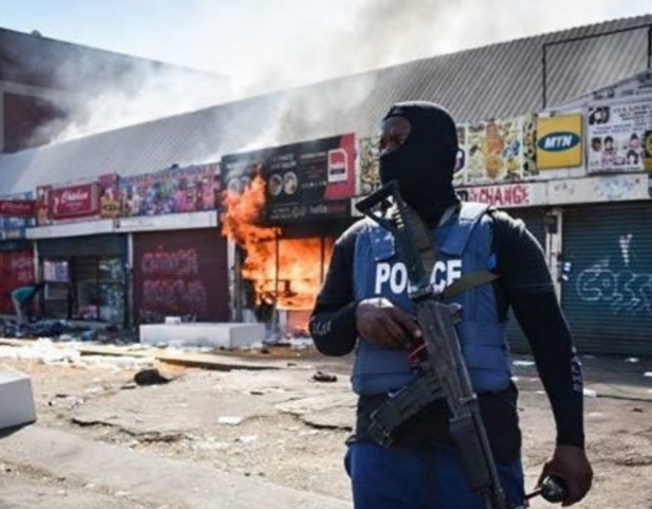
Tensions over illegal immigration are escalating in South Africa as anti-migrant demonstrations continue to spread across parts of the country, prompting President Cyril Ramaphosa to issue a stern warning against vigilante groups accused of fuelling xenophobic violence.
Dozens of protesters marched peacefully through Kwa-Thema township, located about 40 kilometres southeast of Johannesburg, on Monday, demanding stronger government action against undocumented migrants. The demonstration came barely 24 hours after Ramaphosa addressed the nation, pledging decisive action against individuals and groups exploiting public frustrations over immigration to incite unrest and violence.
Carrying placards, singing protest songs, and chanting slogans calling for stricter border controls and tougher immigration enforcement, the demonstrators moved through the township under the watch of security officials. While the march remained largely peaceful, some participants were seen carrying sticks, according to footage broadcast by South Africa’s public broadcaster, SABC.
The latest demonstrations are part of a growing wave of anti-illegal immigration campaigns that have gained momentum this year. Several community-based groups have issued ultimatums demanding that undocumented foreign nationals leave certain areas by June 30, raising fears of a resurgence of xenophobic attacks that have repeatedly scarred the country over the past two decades.
In his national address on Sunday night, President Ramaphosa acknowledged widespread concerns among South Africans regarding illegal immigration and its perceived impact on jobs, crime, and public services. However, he insisted that grievances must be addressed through lawful channels and not through intimidation or violence.
“We will and must not allow groups to use the legitimate concerns of South Africans to destabilise our country through inciting lawlessness and violence,” Ramaphosa said.
The president further warned that authorities would take action against individuals or organisations seeking to exploit public frustrations for political gain, personal interests, or criminal purposes.
“We will act against forces who are exploiting the concerns of our people about illegal immigration to further their own political, personal, or criminal agendas,” he added.
Despite the warning, organisers of the anti-migrant protests welcomed the president’s acknowledgment of the immigration issue, saying their campaign had succeeded in bringing the matter to the forefront of national debate. However, they vowed to continue their demonstrations until authorities implement what they describe as meaningful immigration reforms.
South Africa, one of Africa’s largest and most developed economies, hosts more than three million foreign nationals, representing just over five percent of its population. Many migrants come from neighbouring countries and other parts of Africa seeking employment and economic opportunities.
However, the country continues to battle severe economic challenges, including an unemployment rate exceeding 30 percent. The economic strain has intensified competition for jobs and resources, with migrants often becoming targets of public frustration.
The current unrest has revived painful memories of previous outbreaks of xenophobic violence that shocked the nation and drew international condemnation. In 2008, South Africa experienced its deadliest anti-immigrant violence in modern history, when at least 62 people were killed and thousands displaced from their homes.
Further waves of violence erupted in 2015, 2016, and 2019, leading to deaths, widespread looting, and the destruction of businesses owned by foreign nationals.
The latest tensions have already turned deadly. Reports indicate that at least two Mozambican citizens have been killed in recent incidents linked to anti-migrant unrest.
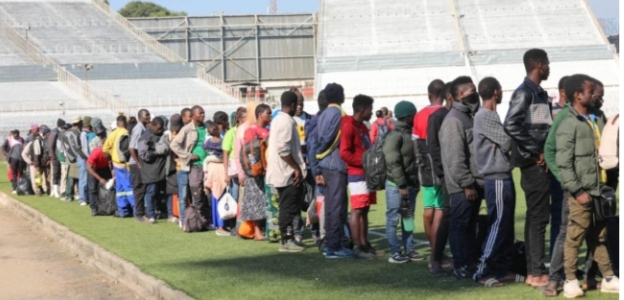
In Durban, one of South Africa’s largest cities and a major port hub, hundreds of foreign nationals sought refuge last month after claiming that local groups had gone door-to-door demanding that immigrants leave their communities before the end of June. Many of those seeking protection were from the Democratic Republic of Congo, Rwanda, Somalia, and other African nations.
The growing insecurity has triggered diplomatic concerns across the continent, prompting several governments to organise evacuation and repatriation efforts for their citizens living in South Africa.
Ghana has taken the lead in these efforts, arranging special flights to return hundreds of its nationals home. South Africa’s border authorities confirmed on Monday that more than 600 Ghanaians were processed for departure over the weekend, bringing the total number of those who have left the country to 995.
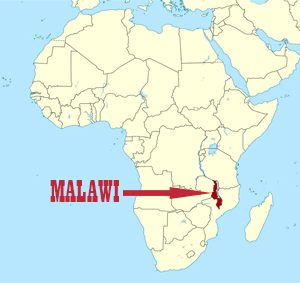
Malawi and Mozambique have also organised buses to transport their citizens back home, while the first batch of Nigerians affected by the crisis is expected to depart South Africa on Wednesday.
Meanwhile, governments including Kenya, Lesotho, and Zimbabwe have issued advisories urging their citizens residing in South Africa to remain vigilant, avoid high-risk areas, and closely monitor developments.
As the June 30 deadline set by some protest groups approaches, concerns are mounting that tensions could escalate further if authorities fail to contain the situation. Human rights organisations have also expressed alarm, warning that inflammatory rhetoric and threats against migrants risk triggering another cycle of violence.
With economic pressures mounting, political tensions rising, and thousands of migrants fearing for their safety, South Africa now faces the difficult challenge of balancing public concerns over illegal immigration with its constitutional commitment to human rights, social cohesion, and the rule of law.
The coming weeks are expected to be critical as the government attempts to prevent further unrest while addressing one of the country's most contentious and politically sensitive issues.